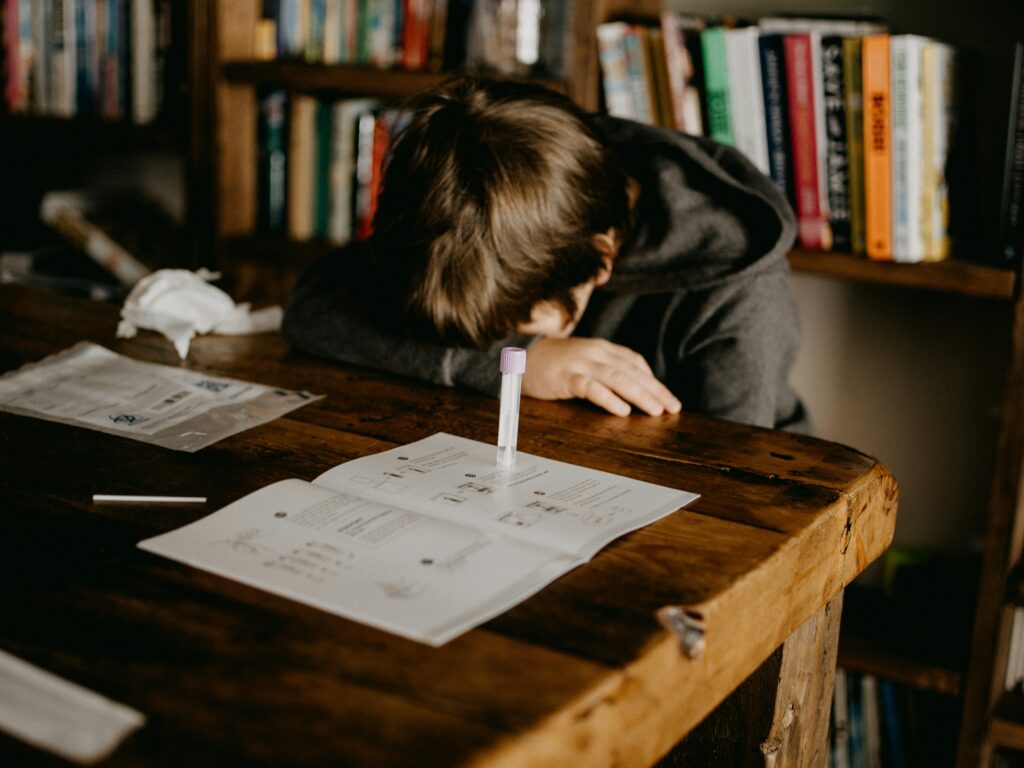
When Your Child Refuses School: Practical Support for Parents Navigating School Avoidance
By Kate Shand, Founder of Enjoy Education
When a child starts refusing school, parents are often left trying to manage two things at once: the immediate day-to-day crisis, and the much bigger fear that something is going badly wrong. Families are left trying to navigate a situation that is emotionally draining, practically disruptive, and often far more complex than it first appears.
In my work over the past 20 years, I have supported many families through periods of school avoidance. One of the most important things I have learned is that this is rarely just about attendance. More often, it is a sign that something in a child’s educational world has become unmanageable, whether that is anxiety, friendship difficulties, academic pressure, an unmet learning need, sensory overwhelm, or a growing sense that school no longer feels safe or sustainable. I’ve actually found many families dislike the term school refusal for exactly this reason, because it can imply a simple choice when the reality is often distress-based and much more complicated.
What school avoidance can really look like
School avoidance does not always begin with a child flatly refusing to leave the house. Sometimes it starts with headaches or stomach aches on Sunday evenings, tears over uniform, repeated lateness, requests to stay home, or a child who gets to school but is completely depleted by the end of the day.
That is important because by the time attendance drops noticeably, there is often already a longer story behind it. The visible behaviour is only part of the picture. What matters most is understanding what school has come to mean for that child.
Why children avoid school
In my work with families, the causes are rarely simple. A child may be anxious about friendships, overwhelmed by noise and transitions, struggling quietly in lessons, feeling pressure to perform, or dreading a particular part of the day. Sometimes there is a mental health difficulty underneath it. Sometimes there is an unmet SEND need. Sometimes there is not one single cause, but an accumulation of strain.
The most useful question is usually not How do I make them go in? but What is making school feel impossible right now? Current guidance for parents and schools reflects this too, pointing to a wide range of possible factors behind school anxiety and non-attendance, and encouraging adults to understand the barrier rather than focus only on the attendance outcome.
What parents should do first
The first thing I usually advise is to lower the temperature. That does not mean accepting the situation indefinitely. It means not making a distressed child’s first experience of help feel like a battle.
Where anxiety is driving the avoidance, force is rarely a good long-term strategy. Guidance for parents recommends listening carefully, avoiding shouting or physically forcing a child into school, and trying to understand what is making them anxious before jumping to solutions.
At home, I would focus on three early steps:
- First, try to identify patterns: is it certain days, lessons, peers, teachers or transitions?
- Second, reassure your child that you are taking this seriously.
- Third, begin documenting what you are seeing, because details become very important later.
How to work with the school
Parents often wait too long before having a proper conversation with school. Once it is clear this is more than a one-off wobble, the school needs the full picture. That usually means involving the class teacher, form tutor, head of year, pastoral lead or SENCO, depending on the age of the child and the nature of the difficulty.
The most productive school conversations are specific. Not my child is struggling, but my child is becoming highly anxious before science, is overwhelmed by lunch break, and cannot face entering through the main corridor. The clearer the barrier, the more realistic the support plan.
I would always encourage schools and parents to work together to understand barriers to attendance and make reasonable adjustments that reduce anxiety and build confidence. In practice, that might include a quiet arrival, a trusted adult check-in, a temporary reduced timetable, flexibility around break times, or support around a particularly difficult lesson.
When to seek extra help
Some situations improve with school adjustments and careful home support. Others need more than that. If anxiety is affecting your child’s daily life, sleep, learning, relationships or ability to function beyond school itself, I would take that seriously and seek additional help.
Parents are advised to speak to their GP and explore mental health support where anxiety is having a significant impact. It is also wise to keep clear records of absences, meetings and agreed actions, particularly if the situation is continuing over time.
This is especially important where a child is showing signs of panic, persistent low mood, severe exhaustion, school-based trauma, or a long pattern of school difficulty that has never been properly understood.
When tuition or homeschooling may be the right next step for School Refusal
One of the hardest things about school avoidance is that academic confidence can fall very quickly. A child misses school, then worries about falling behind, which makes returning feel even harder. Families can find themselves caught between wanting to reduce pressure and not wanting learning to unravel.
This is often the point at which a different kind of educational support becomes helpful. For some children, one to one tuition can protect routine, confidence and progress while the wider school situation is being addressed. For others, where school is simply not manageable for now, a more bespoke homeschooling approach may be the steadier option for a period of time.
I often remind parents that there is a great deal of space between carry on as normal and everything has collapsed. Some children need reintegration support. Some need carefully judged academic continuity. Some need a broader rethink of their educational pathway.
A More Manageable Path Forward
When a child refuses school, parents often feel pulled between urgency and uncertainty. My view is that the most helpful starting point is nearly always the same: understand the barrier before trying to solve the behaviour.
At Enjoy Education, we support families at many different stages of this journey. Sometimes that means helping parents make sense of what is happening and think strategically about next steps. Sometimes it means one to one tuition to protect confidence and learning. Sometimes it means a bespoke homeschooling solution while a child regains stability. The right path will vary, but it should always begin with a clearer understanding of what the child needs.
Please do reach out to us if your family is navigating school refusal and need educational support.
We are here to help!