Structure without rigidity
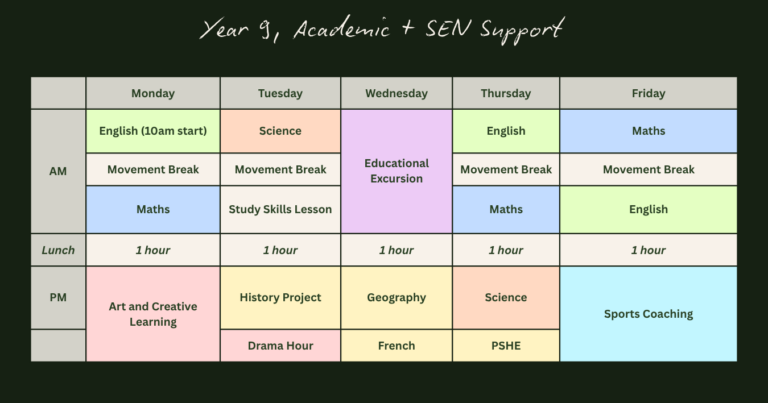
Alex’s timetable demonstrates how relatively small adjustments can make a meaningful difference.
A later start, regular breaks and manageable teaching sessions help create a routine suited to his needs. His tutors can break down complex tasks, use visual resources and provide individual support with planning and organisation.
Beyond core subjects, History projects, creative activities and educational visits provide opportunities to apply learning in different environments.
As Alex approaches his GCSE years, his tutors focus on strengthening subject knowledge and developing the confidence and independence he’ll need for future study. Enjoy’s SENCO can also provide specialist guidance where appropriate.
The objective isn’t to reduce academic expectations. It’s to create the conditions in which Alex can work towards them.
How Many Hours a Day Should a Homeschooled Child Study?
There is no fixed number of hours that every homeschooled child should study. A suitable timetable depends on the student’s age, academic level, learning needs and educational goals.
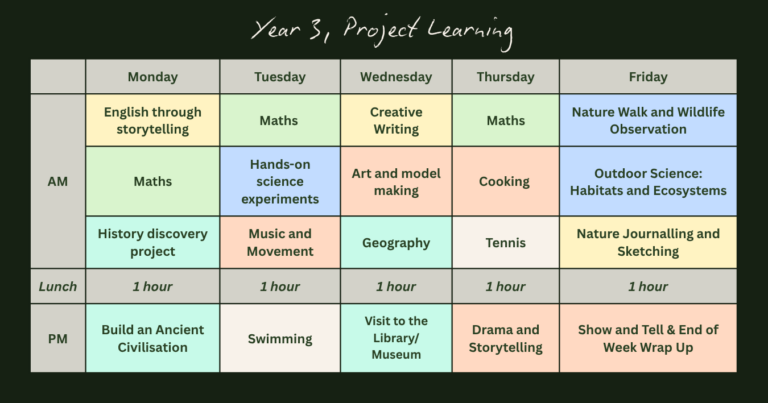
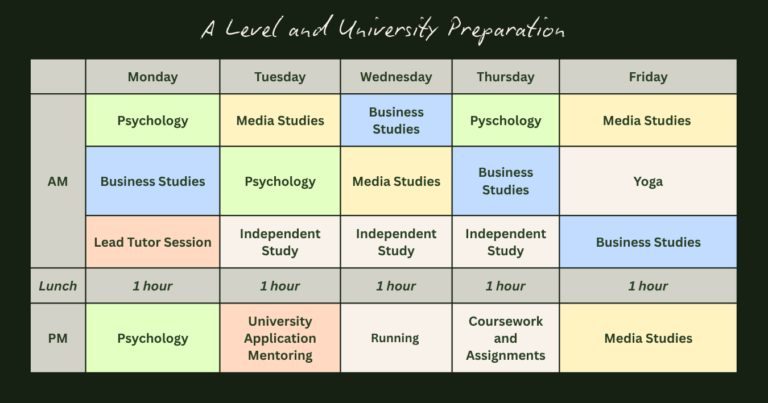
Younger children might have two or three hours of structured tuition a day, alongside projects and practical activities. GCSE and A Level students may need longer periods of specialist teaching and independent study.
Importantly, tutor-led hours are not the same as total learning hours. Reading, research, educational visits, extracurricular activities and independent projects can all contribute to a student’s wider education.
Can a Homeschooling Timetable Change Once It Has Started?
Yes. Homeschooling timetables can and should evolve with the student.
A child returning to education after a difficult period might begin with a reduced timetable, gradually increasing teaching hours as their confidence develops. An A Level student might need additional support as examinations approach, while a younger child’s growing interests might inspire a new project.
At Enjoy Education, each homeschooling programme benefits from a dedicated Programme Manager, academic oversight and a lead tutor coordinating day-to-day teaching. This helps us review progress, communicate with families and adapt the programme as needs change.
Creating a Homeschooling Timetable That Works for Your Child
We work closely with families to explore each student’s academic needs, interests, aspirations and circumstances. From there, we build a personalised curriculum, select specialist tutors and design a timetable that brings everything together.
As these examples show, a homeschooling timetable can be academically ambitious, creative, flexible or highly structured. Often, it’s a combination of all four.